HTTP 基本認證
在最簡單的情況下,你可以使用 HTTP Basic 認證。
在 HTTP Basic 認證中,應用程式會期待一個包含使用者名稱與密碼的標頭。
如果沒有接收到,會回傳 HTTP 401「Unauthorized」錯誤。
並回傳一個 WWW-Authenticate 標頭,其值為 Basic,以及可選的 realm 參數。
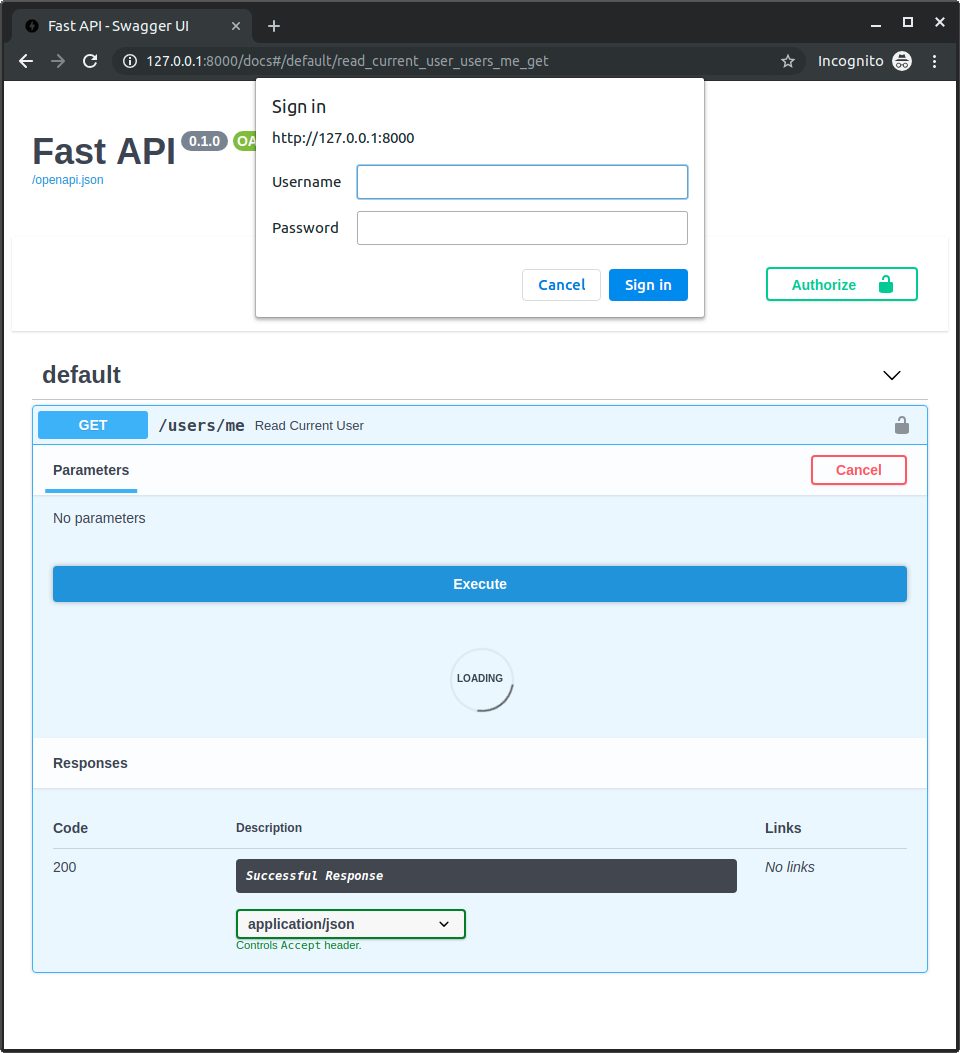
這會告訴瀏覽器顯示內建的使用者名稱與密碼提示視窗。
接著,當你輸入該使用者名稱與密碼時,瀏覽器會自動在標頭中送出它們。
簡單的 HTTP 基本認證
- 匯入
HTTPBasic與HTTPBasicCredentials。 - 使用
HTTPBasic建立一個「securityscheme」。 - 在你的路徑操作中以依賴的方式使用該
security。 - 它會回傳一個
HTTPBasicCredentials型別的物件:- 其中包含傳來的
username與password。
- 其中包含傳來的
from typing import Annotated

from fastapi import Depends, FastAPI
from fastapi.security import HTTPBasic, HTTPBasicCredentials

app = FastAPI()

security = HTTPBasic()


@app.get("/users/me")
def read_current_user(credentials: Annotated[HTTPBasicCredentials, Depends(security)]):
    return {"username": credentials.username, "password": credentials.password}
🤓 Other versions and variants
Tip
Prefer to use the Annotated version if possible.
from fastapi import Depends, FastAPI
from fastapi.security import HTTPBasic, HTTPBasicCredentials

app = FastAPI()

security = HTTPBasic()


@app.get("/users/me")
def read_current_user(credentials: HTTPBasicCredentials = Depends(security)):
    return {"username": credentials.username, "password": credentials.password}
當你第一次嘗試開啟該 URL(或在文件中點擊 "Execute" 按鈕)時,瀏覽器會要求輸入你的使用者名稱與密碼:
檢查使用者名稱
以下是一個更完整的範例。
使用一個依賴來檢查使用者名稱與密碼是否正確。
為此,使用 Python 標準模組 secrets 來比對使用者名稱與密碼。
secrets.compare_digest() 需要接收 bytes,或是只包含 ASCII 字元(英文字符)的 str。這表示它無法處理像 á 這樣的字元,例如 Sebastián。
為了處理這點,我們會先將 username 與 password 以 UTF-8 編碼成 bytes。
接著我們可以使用 secrets.compare_digest() 來確認 credentials.username 等於 "stanleyjobson",而 credentials.password 等於 "swordfish"。
import secrets
from typing import Annotated

from fastapi import Depends, FastAPI, HTTPException, status
from fastapi.security import HTTPBasic, HTTPBasicCredentials

app = FastAPI()

security = HTTPBasic()


def get_current_username(
    credentials: Annotated[HTTPBasicCredentials, Depends(security)],
):
    current_username_bytes = credentials.username.encode("utf8")
    correct_username_bytes = b"stanleyjobson"
    is_correct_username = secrets.compare_digest(
        current_username_bytes, correct_username_bytes
    )
    current_password_bytes = credentials.password.encode("utf8")
    correct_password_bytes = b"swordfish"
    is_correct_password = secrets.compare_digest(
        current_password_bytes, correct_password_bytes
    )
    if not (is_correct_username and is_correct_password):
        raise HTTPException(
            status_code=status.HTTP_401_UNAUTHORIZED,
            detail="Incorrect username or password",
            headers={"WWW-Authenticate": "Basic"},
        )
    return credentials.username


@app.get("/users/me")
def read_current_user(username: Annotated[str, Depends(get_current_username)]):
    return {"username": username}
🤓 Other versions and variants
Tip
Prefer to use the Annotated version if possible.
import secrets

from fastapi import Depends, FastAPI, HTTPException, status
from fastapi.security import HTTPBasic, HTTPBasicCredentials

app = FastAPI()

security = HTTPBasic()


def get_current_username(credentials: HTTPBasicCredentials = Depends(security)):
    current_username_bytes = credentials.username.encode("utf8")
    correct_username_bytes = b"stanleyjobson"
    is_correct_username = secrets.compare_digest(
        current_username_bytes, correct_username_bytes
    )
    current_password_bytes = credentials.password.encode("utf8")
    correct_password_bytes = b"swordfish"
    is_correct_password = secrets.compare_digest(
        current_password_bytes, correct_password_bytes
    )
    if not (is_correct_username and is_correct_password):
        raise HTTPException(
            status_code=status.HTTP_401_UNAUTHORIZED,
            detail="Incorrect username or password",
            headers={"WWW-Authenticate": "Basic"},
        )
    return credentials.username


@app.get("/users/me")
def read_current_user(username: str = Depends(get_current_username)):
    return {"username": username}
這大致等同於:
if not (credentials.username == "stanleyjobson") or not (credentials.password == "swordfish"):
    # 回傳錯誤
    ...
但藉由使用 secrets.compare_digest(),可以防禦一種稱為「計時攻擊」的攻擊。
計時攻擊
什麼是「計時攻擊」呢?
想像有攻擊者在嘗試猜測使用者名稱與密碼。
他們送出一個帶有使用者名稱 johndoe 與密碼 love123 的請求。
接著,你的應用程式中的 Python 程式碼等同於:
if "johndoe" == "stanleyjobson" and "love123" == "swordfish":
    ...
當 Python 比較 johndoe 的第一個 j 與 stanleyjobson 的第一個 s 時,會立刻回傳 False,因為已經知道兩個字串不同,覺得「沒必要浪費計算資源繼續比較剩下的字元」。你的應用程式便會回應「Incorrect username or password」。
但接著攻擊者改用使用者名稱 stanleyjobsox 與密碼 love123 嘗試。
你的應用程式程式碼會做類似:
if "stanleyjobsox" == "stanleyjobson" and "love123" == "swordfish":
    ...
Python 會必須先比較完整的 stanleyjobso(在 stanleyjobsox 與 stanleyjobson 之中都一樣),才會發現兩個字串不同。因此回覆「Incorrect username or password」會多花一些微秒。
回應時間幫了攻擊者
此時,透過觀察伺服器回覆「Incorrect username or password」多花了幾個微秒,攻擊者就知道他們有某些地方猜對了,前幾個字母是正確的。
接著他們會再嘗試,知道它更可能接近 stanleyjobsox 而不是 johndoe。
「專業」的攻擊
當然,攻擊者不會手動嘗試這一切,他們會寫程式來做,可能每秒進行上千或上百萬次測試,一次只多猜中一個正確字母。
但這樣做,幾分鐘或幾小時內,他們就能在我們應用程式「協助」下,僅靠回應時間就猜出正確的使用者名稱與密碼。
用 secrets.compare_digest() 修正
但在我們的程式碼中實際使用的是 secrets.compare_digest()。
簡而言之,將 stanleyjobsox 與 stanleyjobson 比較所花的時間,會與將 johndoe 與 stanleyjobson 比較所花的時間相同;密碼也一樣。
如此一來,在應用程式程式碼中使用 secrets.compare_digest(),就能安全地防禦這整類的安全攻擊。
回傳錯誤
在偵測到憑證不正確之後,回傳一個狀態碼為 401 的 HTTPException(與未提供憑證時相同),並加上 WWW-Authenticate 標頭,讓瀏覽器再次顯示登入提示:
import secrets
from typing import Annotated

from fastapi import Depends, FastAPI, HTTPException, status
from fastapi.security import HTTPBasic, HTTPBasicCredentials

app = FastAPI()

security = HTTPBasic()


def get_current_username(
    credentials: Annotated[HTTPBasicCredentials, Depends(security)],
):
    current_username_bytes = credentials.username.encode("utf8")
    correct_username_bytes = b"stanleyjobson"
    is_correct_username = secrets.compare_digest(
        current_username_bytes, correct_username_bytes
    )
    current_password_bytes = credentials.password.encode("utf8")
    correct_password_bytes = b"swordfish"
    is_correct_password = secrets.compare_digest(
        current_password_bytes, correct_password_bytes
    )
    if not (is_correct_username and is_correct_password):
        raise HTTPException(
            status_code=status.HTTP_401_UNAUTHORIZED,
            detail="Incorrect username or password",
            headers={"WWW-Authenticate": "Basic"},
        )
    return credentials.username


@app.get("/users/me")
def read_current_user(username: Annotated[str, Depends(get_current_username)]):
    return {"username": username}
🤓 Other versions and variants
Tip
Prefer to use the Annotated version if possible.
import secrets

from fastapi import Depends, FastAPI, HTTPException, status
from fastapi.security import HTTPBasic, HTTPBasicCredentials

app = FastAPI()

security = HTTPBasic()


def get_current_username(credentials: HTTPBasicCredentials = Depends(security)):
    current_username_bytes = credentials.username.encode("utf8")
    correct_username_bytes = b"stanleyjobson"
    is_correct_username = secrets.compare_digest(
        current_username_bytes, correct_username_bytes
    )
    current_password_bytes = credentials.password.encode("utf8")
    correct_password_bytes = b"swordfish"
    is_correct_password = secrets.compare_digest(
        current_password_bytes, correct_password_bytes
    )
    if not (is_correct_username and is_correct_password):
        raise HTTPException(
            status_code=status.HTTP_401_UNAUTHORIZED,
            detail="Incorrect username or password",
            headers={"WWW-Authenticate": "Basic"},
        )
    return credentials.username


@app.get("/users/me")
def read_current_user(username: str = Depends(get_current_username)):
    return {"username": username}