パスワードとBearerによるシンプルなOAuth2
🌐 AI と人間による翻訳
この翻訳は、人間のガイドに基づいて AI によって作成されました。🤝
原文の意図を取り違えていたり、不自然な表現になっている可能性があります。🤖
AI LLM をより適切に誘導するのを手伝う ことで、この翻訳を改善できます。
前章から発展させて、完全なセキュリティフローに必要な不足部分を追加していきます。
username と password を取得する
username と password を取得するために FastAPI のセキュリティユーティリティを使います。
OAuth2 では、「password flow」(ここで使用するフロー)を使う場合、クライアント/ユーザーはフォームデータとして username と password フィールドを送信する必要があります。
しかも、フィールド名はこの通りでなければなりません。つまり、user-name や email では動作しません。
ただし、フロントエンドで最終ユーザーにどう表示するかは自由です。
また、データベースのモデルでは任意の別名を使って構いません。
しかし、ログイン用の path operation では、仕様との互換性を保つ(たとえば組み込みのAPIドキュメントシステムを使えるようにする)ために、これらの名前を使う必要があります。
また、仕様では username と password はフォームデータとして送らなければならない(つまり、ここではJSONは使わない)ことも定められています。
scope
仕様では、クライアントは追加のフォームフィールド「scope」を送ることができるとも書かれています。
フォームフィールド名は scope(単数形)ですが、実態はスペース区切りの「スコープ」文字列を並べた長い文字列です。
各「スコープ」は(スペースを含まない)単なる文字列です。
通常、特定のセキュリティ権限を宣言するために使われます。例えば:
users:readやusers:writeはよくある例です。instagram_basicは Facebook / Instagram で使われます。https://www.googleapis.com/auth/driveは Google で使われます。
情報
OAuth2 における「スコープ」は、要求される特定の権限を表す単なる文字列です。
: のような他の文字を含んでいても、URL であっても構いません。
それらの詳細は実装依存です。
OAuth2 にとっては単なる文字列です。
username と password を取得するコード
では、これを処理するために FastAPI が提供するユーティリティを使いましょう。
OAuth2PasswordRequestForm
まず、OAuth2PasswordRequestForm をインポートし、/token の path operation に Depends で依存関係として使います:
from typing import Annotated

from fastapi import Depends, FastAPI, HTTPException, status
from fastapi.security import OAuth2PasswordBearer, OAuth2PasswordRequestForm
from pydantic import BaseModel

fake_users_db = {
    "johndoe": {
        "username": "johndoe",
        "full_name": "John Doe",
        "email": "johndoe@example.com",
        "hashed_password": "fakehashedsecret",
        "disabled": False,
    },
    "alice": {
        "username": "alice",
        "full_name": "Alice Wonderson",
        "email": "alice@example.com",
        "hashed_password": "fakehashedsecret2",
        "disabled": True,
    },
}

app = FastAPI()


def fake_hash_password(password: str):
    return "fakehashed" + password


oauth2_scheme = OAuth2PasswordBearer(tokenUrl="token")


class User(BaseModel):
    username: str
    email: str | None = None
    full_name: str | None = None
    disabled: bool | None = None


class UserInDB(User):
    hashed_password: str


def get_user(db, username: str):
    if username in db:
        user_dict = db[username]
        return UserInDB(**user_dict)


def fake_decode_token(token):
    # This doesn't provide any security at all
    # Check the next version
    user = get_user(fake_users_db, token)
    return user


async def get_current_user(token: Annotated[str, Depends(oauth2_scheme)]):
    user = fake_decode_token(token)
    if not user:
        raise HTTPException(
            status_code=status.HTTP_401_UNAUTHORIZED,
            detail="Not authenticated",
            headers={"WWW-Authenticate": "Bearer"},
        )
    return user


async def get_current_active_user(
    current_user: Annotated[User, Depends(get_current_user)],
):
    if current_user.disabled:
        raise HTTPException(status_code=400, detail="Inactive user")
    return current_user


@app.post("/token")
async def login(form_data: Annotated[OAuth2PasswordRequestForm, Depends()]):
    user_dict = fake_users_db.get(form_data.username)
    if not user_dict:
        raise HTTPException(status_code=400, detail="Incorrect username or password")
    user = UserInDB(**user_dict)
    hashed_password = fake_hash_password(form_data.password)
    if not hashed_password == user.hashed_password:
        raise HTTPException(status_code=400, detail="Incorrect username or password")

    return {"access_token": user.username, "token_type": "bearer"}


@app.get("/users/me")
async def read_users_me(
    current_user: Annotated[User, Depends(get_current_active_user)],
):
    return current_user
🤓 Other versions and variants
Tip
Prefer to use the Annotated version if possible.
from fastapi import Depends, FastAPI, HTTPException, status
from fastapi.security import OAuth2PasswordBearer, OAuth2PasswordRequestForm
from pydantic import BaseModel

fake_users_db = {
    "johndoe": {
        "username": "johndoe",
        "full_name": "John Doe",
        "email": "johndoe@example.com",
        "hashed_password": "fakehashedsecret",
        "disabled": False,
    },
    "alice": {
        "username": "alice",
        "full_name": "Alice Wonderson",
        "email": "alice@example.com",
        "hashed_password": "fakehashedsecret2",
        "disabled": True,
    },
}

app = FastAPI()


def fake_hash_password(password: str):
    return "fakehashed" + password


oauth2_scheme = OAuth2PasswordBearer(tokenUrl="token")


class User(BaseModel):
    username: str
    email: str | None = None
    full_name: str | None = None
    disabled: bool | None = None


class UserInDB(User):
    hashed_password: str


def get_user(db, username: str):
    if username in db:
        user_dict = db[username]
        return UserInDB(**user_dict)


def fake_decode_token(token):
    # This doesn't provide any security at all
    # Check the next version
    user = get_user(fake_users_db, token)
    return user


async def get_current_user(token: str = Depends(oauth2_scheme)):
    user = fake_decode_token(token)
    if not user:
        raise HTTPException(
            status_code=status.HTTP_401_UNAUTHORIZED,
            detail="Not authenticated",
            headers={"WWW-Authenticate": "Bearer"},
        )
    return user


async def get_current_active_user(current_user: User = Depends(get_current_user)):
    if current_user.disabled:
        raise HTTPException(status_code=400, detail="Inactive user")
    return current_user


@app.post("/token")
async def login(form_data: OAuth2PasswordRequestForm = Depends()):
    user_dict = fake_users_db.get(form_data.username)
    if not user_dict:
        raise HTTPException(status_code=400, detail="Incorrect username or password")
    user = UserInDB(**user_dict)
    hashed_password = fake_hash_password(form_data.password)
    if not hashed_password == user.hashed_password:
        raise HTTPException(status_code=400, detail="Incorrect username or password")

    return {"access_token": user.username, "token_type": "bearer"}


@app.get("/users/me")
async def read_users_me(current_user: User = Depends(get_current_active_user)):
    return current_user
OAuth2PasswordRequestForm は次のフォームボディを宣言するクラス依存関係です:
usernamepassword- スペース区切りの文字列で構成される、オプションの
scopeフィールド - オプションの
grant_type
豆知識
OAuth2 の仕様では、固定値 password を持つフィールド grant_type が実際には必須ですが、OAuth2PasswordRequestForm はそれを強制しません。
強制したい場合は、OAuth2PasswordRequestForm の代わりに OAuth2PasswordRequestFormStrict を使ってください。
- オプションの
client_id(この例では不要) - オプションの
client_secret(この例では不要)
情報
OAuth2PasswordRequestForm は、OAuth2PasswordBearer のように FastAPI にとって特別なクラスではありません。
OAuth2PasswordBearer は FastAPI にセキュリティスキームであることを認識させます。そのため OpenAPI にそのように追加されます。
一方、OAuth2PasswordRequestForm は、あなた自身でも書けるような単なるクラス依存関係であり、直接 Form パラメータを宣言することもできます。
ただし一般的なユースケースなので、簡単に使えるよう FastAPI が直接提供しています。
フォームデータの利用
豆知識
依存関係クラス OAuth2PasswordRequestForm のインスタンスは、スペース区切りの長い文字列を持つ scope 属性は持ちません。代わりに、送られてきた各スコープの実際の文字列リストを格納する scopes 属性を持ちます。
この例では scopes は使いませんが、必要ならその機能が利用できます。
次に、フォームフィールドの username を使って(疑似の)データベースからユーザーデータを取得します。
そのユーザーが存在しない場合は、「Incorrect username or password」というエラーを返します。
エラーには HTTPException 例外を使います:
from typing import Annotated

from fastapi import Depends, FastAPI, HTTPException, status
from fastapi.security import OAuth2PasswordBearer, OAuth2PasswordRequestForm
from pydantic import BaseModel

fake_users_db = {
    "johndoe": {
        "username": "johndoe",
        "full_name": "John Doe",
        "email": "johndoe@example.com",
        "hashed_password": "fakehashedsecret",
        "disabled": False,
    },
    "alice": {
        "username": "alice",
        "full_name": "Alice Wonderson",
        "email": "alice@example.com",
        "hashed_password": "fakehashedsecret2",
        "disabled": True,
    },
}

app = FastAPI()


def fake_hash_password(password: str):
    return "fakehashed" + password


oauth2_scheme = OAuth2PasswordBearer(tokenUrl="token")


class User(BaseModel):
    username: str
    email: str | None = None
    full_name: str | None = None
    disabled: bool | None = None


class UserInDB(User):
    hashed_password: str


def get_user(db, username: str):
    if username in db:
        user_dict = db[username]
        return UserInDB(**user_dict)


def fake_decode_token(token):
    # This doesn't provide any security at all
    # Check the next version
    user = get_user(fake_users_db, token)
    return user


async def get_current_user(token: Annotated[str, Depends(oauth2_scheme)]):
    user = fake_decode_token(token)
    if not user:
        raise HTTPException(
            status_code=status.HTTP_401_UNAUTHORIZED,
            detail="Not authenticated",
            headers={"WWW-Authenticate": "Bearer"},
        )
    return user


async def get_current_active_user(
    current_user: Annotated[User, Depends(get_current_user)],
):
    if current_user.disabled:
        raise HTTPException(status_code=400, detail="Inactive user")
    return current_user


@app.post("/token")
async def login(form_data: Annotated[OAuth2PasswordRequestForm, Depends()]):
    user_dict = fake_users_db.get(form_data.username)
    if not user_dict:
        raise HTTPException(status_code=400, detail="Incorrect username or password")
    user = UserInDB(**user_dict)
    hashed_password = fake_hash_password(form_data.password)
    if not hashed_password == user.hashed_password:
        raise HTTPException(status_code=400, detail="Incorrect username or password")

    return {"access_token": user.username, "token_type": "bearer"}


@app.get("/users/me")
async def read_users_me(
    current_user: Annotated[User, Depends(get_current_active_user)],
):
    return current_user
🤓 Other versions and variants
Tip
Prefer to use the Annotated version if possible.
from fastapi import Depends, FastAPI, HTTPException, status
from fastapi.security import OAuth2PasswordBearer, OAuth2PasswordRequestForm
from pydantic import BaseModel

fake_users_db = {
    "johndoe": {
        "username": "johndoe",
        "full_name": "John Doe",
        "email": "johndoe@example.com",
        "hashed_password": "fakehashedsecret",
        "disabled": False,
    },
    "alice": {
        "username": "alice",
        "full_name": "Alice Wonderson",
        "email": "alice@example.com",
        "hashed_password": "fakehashedsecret2",
        "disabled": True,
    },
}

app = FastAPI()


def fake_hash_password(password: str):
    return "fakehashed" + password


oauth2_scheme = OAuth2PasswordBearer(tokenUrl="token")


class User(BaseModel):
    username: str
    email: str | None = None
    full_name: str | None = None
    disabled: bool | None = None


class UserInDB(User):
    hashed_password: str


def get_user(db, username: str):
    if username in db:
        user_dict = db[username]
        return UserInDB(**user_dict)


def fake_decode_token(token):
    # This doesn't provide any security at all
    # Check the next version
    user = get_user(fake_users_db, token)
    return user


async def get_current_user(token: str = Depends(oauth2_scheme)):
    user = fake_decode_token(token)
    if not user:
        raise HTTPException(
            status_code=status.HTTP_401_UNAUTHORIZED,
            detail="Not authenticated",
            headers={"WWW-Authenticate": "Bearer"},
        )
    return user


async def get_current_active_user(current_user: User = Depends(get_current_user)):
    if current_user.disabled:
        raise HTTPException(status_code=400, detail="Inactive user")
    return current_user


@app.post("/token")
async def login(form_data: OAuth2PasswordRequestForm = Depends()):
    user_dict = fake_users_db.get(form_data.username)
    if not user_dict:
        raise HTTPException(status_code=400, detail="Incorrect username or password")
    user = UserInDB(**user_dict)
    hashed_password = fake_hash_password(form_data.password)
    if not hashed_password == user.hashed_password:
        raise HTTPException(status_code=400, detail="Incorrect username or password")

    return {"access_token": user.username, "token_type": "bearer"}


@app.get("/users/me")
async def read_users_me(current_user: User = Depends(get_current_active_user)):
    return current_user
パスワードのチェック
この時点でデータベースからユーザーデータは取得できましたが、まだパスワードを確認していません。
まず、そのデータを Pydantic の UserInDB モデルに入れます。
プレーンテキストのパスワードを保存してはいけないので、(疑似の)パスワードハッシュ化システムを使います。
パスワードが一致しなければ、同じエラーを返します。
パスワードハッシュ化
「ハッシュ化」とは、ある内容(ここではパスワード)を、乱雑に見えるバイト列(単なる文字列)に変換することを指します。
まったく同じ内容(まったく同じパスワード)を渡すと、毎回まったく同じ乱雑な文字列が得られます。
しかし、その乱雑な文字列から元のパスワードに戻すことはできません。
なぜパスワードをハッシュ化するのか
もしデータベースが盗まれても、盗んだ側が手にするのはユーザーのプレーンテキストのパスワードではなく、ハッシュだけです。
したがって、盗んだ側は同じパスワードを別のシステムで試すことができません(多くのユーザーがあらゆる場所で同じパスワードを使っているため、これは危険になり得ます)。
from typing import Annotated

from fastapi import Depends, FastAPI, HTTPException, status
from fastapi.security import OAuth2PasswordBearer, OAuth2PasswordRequestForm
from pydantic import BaseModel

fake_users_db = {
    "johndoe": {
        "username": "johndoe",
        "full_name": "John Doe",
        "email": "johndoe@example.com",
        "hashed_password": "fakehashedsecret",
        "disabled": False,
    },
    "alice": {
        "username": "alice",
        "full_name": "Alice Wonderson",
        "email": "alice@example.com",
        "hashed_password": "fakehashedsecret2",
        "disabled": True,
    },
}

app = FastAPI()


def fake_hash_password(password: str):
    return "fakehashed" + password


oauth2_scheme = OAuth2PasswordBearer(tokenUrl="token")


class User(BaseModel):
    username: str
    email: str | None = None
    full_name: str | None = None
    disabled: bool | None = None


class UserInDB(User):
    hashed_password: str


def get_user(db, username: str):
    if username in db:
        user_dict = db[username]
        return UserInDB(**user_dict)


def fake_decode_token(token):
    # This doesn't provide any security at all
    # Check the next version
    user = get_user(fake_users_db, token)
    return user


async def get_current_user(token: Annotated[str, Depends(oauth2_scheme)]):
    user = fake_decode_token(token)
    if not user:
        raise HTTPException(
            status_code=status.HTTP_401_UNAUTHORIZED,
            detail="Not authenticated",
            headers={"WWW-Authenticate": "Bearer"},
        )
    return user


async def get_current_active_user(
    current_user: Annotated[User, Depends(get_current_user)],
):
    if current_user.disabled:
        raise HTTPException(status_code=400, detail="Inactive user")
    return current_user


@app.post("/token")
async def login(form_data: Annotated[OAuth2PasswordRequestForm, Depends()]):
    user_dict = fake_users_db.get(form_data.username)
    if not user_dict:
        raise HTTPException(status_code=400, detail="Incorrect username or password")
    user = UserInDB(**user_dict)
    hashed_password = fake_hash_password(form_data.password)
    if not hashed_password == user.hashed_password:
        raise HTTPException(status_code=400, detail="Incorrect username or password")

    return {"access_token": user.username, "token_type": "bearer"}


@app.get("/users/me")
async def read_users_me(
    current_user: Annotated[User, Depends(get_current_active_user)],
):
    return current_user
🤓 Other versions and variants
Tip
Prefer to use the Annotated version if possible.
from fastapi import Depends, FastAPI, HTTPException, status
from fastapi.security import OAuth2PasswordBearer, OAuth2PasswordRequestForm
from pydantic import BaseModel

fake_users_db = {
    "johndoe": {
        "username": "johndoe",
        "full_name": "John Doe",
        "email": "johndoe@example.com",
        "hashed_password": "fakehashedsecret",
        "disabled": False,
    },
    "alice": {
        "username": "alice",
        "full_name": "Alice Wonderson",
        "email": "alice@example.com",
        "hashed_password": "fakehashedsecret2",
        "disabled": True,
    },
}

app = FastAPI()


def fake_hash_password(password: str):
    return "fakehashed" + password


oauth2_scheme = OAuth2PasswordBearer(tokenUrl="token")


class User(BaseModel):
    username: str
    email: str | None = None
    full_name: str | None = None
    disabled: bool | None = None


class UserInDB(User):
    hashed_password: str


def get_user(db, username: str):
    if username in db:
        user_dict = db[username]
        return UserInDB(**user_dict)


def fake_decode_token(token):
    # This doesn't provide any security at all
    # Check the next version
    user = get_user(fake_users_db, token)
    return user


async def get_current_user(token: str = Depends(oauth2_scheme)):
    user = fake_decode_token(token)
    if not user:
        raise HTTPException(
            status_code=status.HTTP_401_UNAUTHORIZED,
            detail="Not authenticated",
            headers={"WWW-Authenticate": "Bearer"},
        )
    return user


async def get_current_active_user(current_user: User = Depends(get_current_user)):
    if current_user.disabled:
        raise HTTPException(status_code=400, detail="Inactive user")
    return current_user


@app.post("/token")
async def login(form_data: OAuth2PasswordRequestForm = Depends()):
    user_dict = fake_users_db.get(form_data.username)
    if not user_dict:
        raise HTTPException(status_code=400, detail="Incorrect username or password")
    user = UserInDB(**user_dict)
    hashed_password = fake_hash_password(form_data.password)
    if not hashed_password == user.hashed_password:
        raise HTTPException(status_code=400, detail="Incorrect username or password")

    return {"access_token": user.username, "token_type": "bearer"}


@app.get("/users/me")
async def read_users_me(current_user: User = Depends(get_current_active_user)):
    return current_user
**user_dict について
UserInDB(**user_dict) は次を意味します:
user_dict のキーと値を、そのままキーワード引数として渡します。つまり次と同等です:
UserInDB(
    username = user_dict["username"],
    email = user_dict["email"],
    full_name = user_dict["full_name"],
    disabled = user_dict["disabled"],
    hashed_password = user_dict["hashed_password"],
)
情報
**user_dict のより完全な解説は、追加モデルのドキュメントを参照してください。
トークンを返す
token エンドポイントのレスポンスは JSON オブジェクトでなければなりません。
token_type を含める必要があります。ここでは「Bearer」トークンを使うので、トークンタイプは「bearer」です。
そして access_token を含め、その中にアクセストークンの文字列を入れます。
この単純な例では、完全に安全ではありませんが、トークンとして同じ username をそのまま返します。
豆知識
次の章では、パスワードハッシュ化と JWT トークンを使った本当に安全な実装を見ます。
しかし今は、必要な特定の詳細に集中しましょう。
from typing import Annotated

from fastapi import Depends, FastAPI, HTTPException, status
from fastapi.security import OAuth2PasswordBearer, OAuth2PasswordRequestForm
from pydantic import BaseModel

fake_users_db = {
    "johndoe": {
        "username": "johndoe",
        "full_name": "John Doe",
        "email": "johndoe@example.com",
        "hashed_password": "fakehashedsecret",
        "disabled": False,
    },
    "alice": {
        "username": "alice",
        "full_name": "Alice Wonderson",
        "email": "alice@example.com",
        "hashed_password": "fakehashedsecret2",
        "disabled": True,
    },
}

app = FastAPI()


def fake_hash_password(password: str):
    return "fakehashed" + password


oauth2_scheme = OAuth2PasswordBearer(tokenUrl="token")


class User(BaseModel):
    username: str
    email: str | None = None
    full_name: str | None = None
    disabled: bool | None = None


class UserInDB(User):
    hashed_password: str


def get_user(db, username: str):
    if username in db:
        user_dict = db[username]
        return UserInDB(**user_dict)


def fake_decode_token(token):
    # This doesn't provide any security at all
    # Check the next version
    user = get_user(fake_users_db, token)
    return user


async def get_current_user(token: Annotated[str, Depends(oauth2_scheme)]):
    user = fake_decode_token(token)
    if not user:
        raise HTTPException(
            status_code=status.HTTP_401_UNAUTHORIZED,
            detail="Not authenticated",
            headers={"WWW-Authenticate": "Bearer"},
        )
    return user


async def get_current_active_user(
    current_user: Annotated[User, Depends(get_current_user)],
):
    if current_user.disabled:
        raise HTTPException(status_code=400, detail="Inactive user")
    return current_user


@app.post("/token")
async def login(form_data: Annotated[OAuth2PasswordRequestForm, Depends()]):
    user_dict = fake_users_db.get(form_data.username)
    if not user_dict:
        raise HTTPException(status_code=400, detail="Incorrect username or password")
    user = UserInDB(**user_dict)
    hashed_password = fake_hash_password(form_data.password)
    if not hashed_password == user.hashed_password:
        raise HTTPException(status_code=400, detail="Incorrect username or password")

    return {"access_token": user.username, "token_type": "bearer"}


@app.get("/users/me")
async def read_users_me(
    current_user: Annotated[User, Depends(get_current_active_user)],
):
    return current_user
🤓 Other versions and variants
Tip
Prefer to use the Annotated version if possible.
from fastapi import Depends, FastAPI, HTTPException, status
from fastapi.security import OAuth2PasswordBearer, OAuth2PasswordRequestForm
from pydantic import BaseModel

fake_users_db = {
    "johndoe": {
        "username": "johndoe",
        "full_name": "John Doe",
        "email": "johndoe@example.com",
        "hashed_password": "fakehashedsecret",
        "disabled": False,
    },
    "alice": {
        "username": "alice",
        "full_name": "Alice Wonderson",
        "email": "alice@example.com",
        "hashed_password": "fakehashedsecret2",
        "disabled": True,
    },
}

app = FastAPI()


def fake_hash_password(password: str):
    return "fakehashed" + password


oauth2_scheme = OAuth2PasswordBearer(tokenUrl="token")


class User(BaseModel):
    username: str
    email: str | None = None
    full_name: str | None = None
    disabled: bool | None = None


class UserInDB(User):
    hashed_password: str


def get_user(db, username: str):
    if username in db:
        user_dict = db[username]
        return UserInDB(**user_dict)


def fake_decode_token(token):
    # This doesn't provide any security at all
    # Check the next version
    user = get_user(fake_users_db, token)
    return user


async def get_current_user(token: str = Depends(oauth2_scheme)):
    user = fake_decode_token(token)
    if not user:
        raise HTTPException(
            status_code=status.HTTP_401_UNAUTHORIZED,
            detail="Not authenticated",
            headers={"WWW-Authenticate": "Bearer"},
        )
    return user


async def get_current_active_user(current_user: User = Depends(get_current_user)):
    if current_user.disabled:
        raise HTTPException(status_code=400, detail="Inactive user")
    return current_user


@app.post("/token")
async def login(form_data: OAuth2PasswordRequestForm = Depends()):
    user_dict = fake_users_db.get(form_data.username)
    if not user_dict:
        raise HTTPException(status_code=400, detail="Incorrect username or password")
    user = UserInDB(**user_dict)
    hashed_password = fake_hash_password(form_data.password)
    if not hashed_password == user.hashed_password:
        raise HTTPException(status_code=400, detail="Incorrect username or password")

    return {"access_token": user.username, "token_type": "bearer"}


@app.get("/users/me")
async def read_users_me(current_user: User = Depends(get_current_active_user)):
    return current_user
豆知識
仕様に従うと、この例と同じく access_token と token_type を含む JSON を返す必要があります。
これはあなた自身のコードで実装する必要があり、これらのJSONキーを使っていることを確認してください。
仕様に準拠するために、あなた自身が正しく覚えて実装すべきことは、ほぼこれだけです。
それ以外は FastAPI が面倒を見てくれます。
依存関係の更新
ここで依存関係を更新します。
アクティブなユーザーの場合にのみ current_user を取得したいとします。
そこで、get_current_active_user を依存関係として利用する追加の依存関係 get_current_active_user を作成します。
これら2つの依存関係は、ユーザーが存在しない、または非アクティブである場合に、HTTPエラーを返すだけです。
したがって、エンドポイントでは、ユーザーが存在し、正しく認証され、かつアクティブである場合にのみ、ユーザーを取得します:
from typing import Annotated

from fastapi import Depends, FastAPI, HTTPException, status
from fastapi.security import OAuth2PasswordBearer, OAuth2PasswordRequestForm
from pydantic import BaseModel

fake_users_db = {
    "johndoe": {
        "username": "johndoe",
        "full_name": "John Doe",
        "email": "johndoe@example.com",
        "hashed_password": "fakehashedsecret",
        "disabled": False,
    },
    "alice": {
        "username": "alice",
        "full_name": "Alice Wonderson",
        "email": "alice@example.com",
        "hashed_password": "fakehashedsecret2",
        "disabled": True,
    },
}

app = FastAPI()


def fake_hash_password(password: str):
    return "fakehashed" + password


oauth2_scheme = OAuth2PasswordBearer(tokenUrl="token")


class User(BaseModel):
    username: str
    email: str | None = None
    full_name: str | None = None
    disabled: bool | None = None


class UserInDB(User):
    hashed_password: str


def get_user(db, username: str):
    if username in db:
        user_dict = db[username]
        return UserInDB(**user_dict)


def fake_decode_token(token):
    # This doesn't provide any security at all
    # Check the next version
    user = get_user(fake_users_db, token)
    return user


async def get_current_user(token: Annotated[str, Depends(oauth2_scheme)]):
    user = fake_decode_token(token)
    if not user:
        raise HTTPException(
            status_code=status.HTTP_401_UNAUTHORIZED,
            detail="Not authenticated",
            headers={"WWW-Authenticate": "Bearer"},
        )
    return user


async def get_current_active_user(
    current_user: Annotated[User, Depends(get_current_user)],
):
    if current_user.disabled:
        raise HTTPException(status_code=400, detail="Inactive user")
    return current_user


@app.post("/token")
async def login(form_data: Annotated[OAuth2PasswordRequestForm, Depends()]):
    user_dict = fake_users_db.get(form_data.username)
    if not user_dict:
        raise HTTPException(status_code=400, detail="Incorrect username or password")
    user = UserInDB(**user_dict)
    hashed_password = fake_hash_password(form_data.password)
    if not hashed_password == user.hashed_password:
        raise HTTPException(status_code=400, detail="Incorrect username or password")

    return {"access_token": user.username, "token_type": "bearer"}


@app.get("/users/me")
async def read_users_me(
    current_user: Annotated[User, Depends(get_current_active_user)],
):
    return current_user
🤓 Other versions and variants
Tip
Prefer to use the Annotated version if possible.
from fastapi import Depends, FastAPI, HTTPException, status
from fastapi.security import OAuth2PasswordBearer, OAuth2PasswordRequestForm
from pydantic import BaseModel

fake_users_db = {
    "johndoe": {
        "username": "johndoe",
        "full_name": "John Doe",
        "email": "johndoe@example.com",
        "hashed_password": "fakehashedsecret",
        "disabled": False,
    },
    "alice": {
        "username": "alice",
        "full_name": "Alice Wonderson",
        "email": "alice@example.com",
        "hashed_password": "fakehashedsecret2",
        "disabled": True,
    },
}

app = FastAPI()


def fake_hash_password(password: str):
    return "fakehashed" + password


oauth2_scheme = OAuth2PasswordBearer(tokenUrl="token")


class User(BaseModel):
    username: str
    email: str | None = None
    full_name: str | None = None
    disabled: bool | None = None


class UserInDB(User):
    hashed_password: str


def get_user(db, username: str):
    if username in db:
        user_dict = db[username]
        return UserInDB(**user_dict)


def fake_decode_token(token):
    # This doesn't provide any security at all
    # Check the next version
    user = get_user(fake_users_db, token)
    return user


async def get_current_user(token: str = Depends(oauth2_scheme)):
    user = fake_decode_token(token)
    if not user:
        raise HTTPException(
            status_code=status.HTTP_401_UNAUTHORIZED,
            detail="Not authenticated",
            headers={"WWW-Authenticate": "Bearer"},
        )
    return user


async def get_current_active_user(current_user: User = Depends(get_current_user)):
    if current_user.disabled:
        raise HTTPException(status_code=400, detail="Inactive user")
    return current_user


@app.post("/token")
async def login(form_data: OAuth2PasswordRequestForm = Depends()):
    user_dict = fake_users_db.get(form_data.username)
    if not user_dict:
        raise HTTPException(status_code=400, detail="Incorrect username or password")
    user = UserInDB(**user_dict)
    hashed_password = fake_hash_password(form_data.password)
    if not hashed_password == user.hashed_password:
        raise HTTPException(status_code=400, detail="Incorrect username or password")

    return {"access_token": user.username, "token_type": "bearer"}


@app.get("/users/me")
async def read_users_me(current_user: User = Depends(get_current_active_user)):
    return current_user
情報
ここで返している値が Bearer の追加ヘッダー WWW-Authenticate も仕様の一部です。
HTTP(エラー)ステータスコード 401「UNAUTHORIZED」は、WWW-Authenticate ヘッダーも返すことになっています。
ベアラートークン(今回のケース)の場合、そのヘッダーの値は Bearer であるべきです。
実際のところ、この追加ヘッダーを省略しても動作はします。
しかし、仕様に準拠するためにここでは付与しています。
また、(今または将来)それを想定して利用するツールがあるかもしれず、あなたやユーザーにとって有用になる可能性があります。
これが標準の利点です…。
動作確認
インタラクティブドキュメントを開きます: http://127.0.0.1:8000/docs。
認証
「Authorize」ボタンをクリックします。
次の認証情報を使います:
User: johndoe
Password: secret
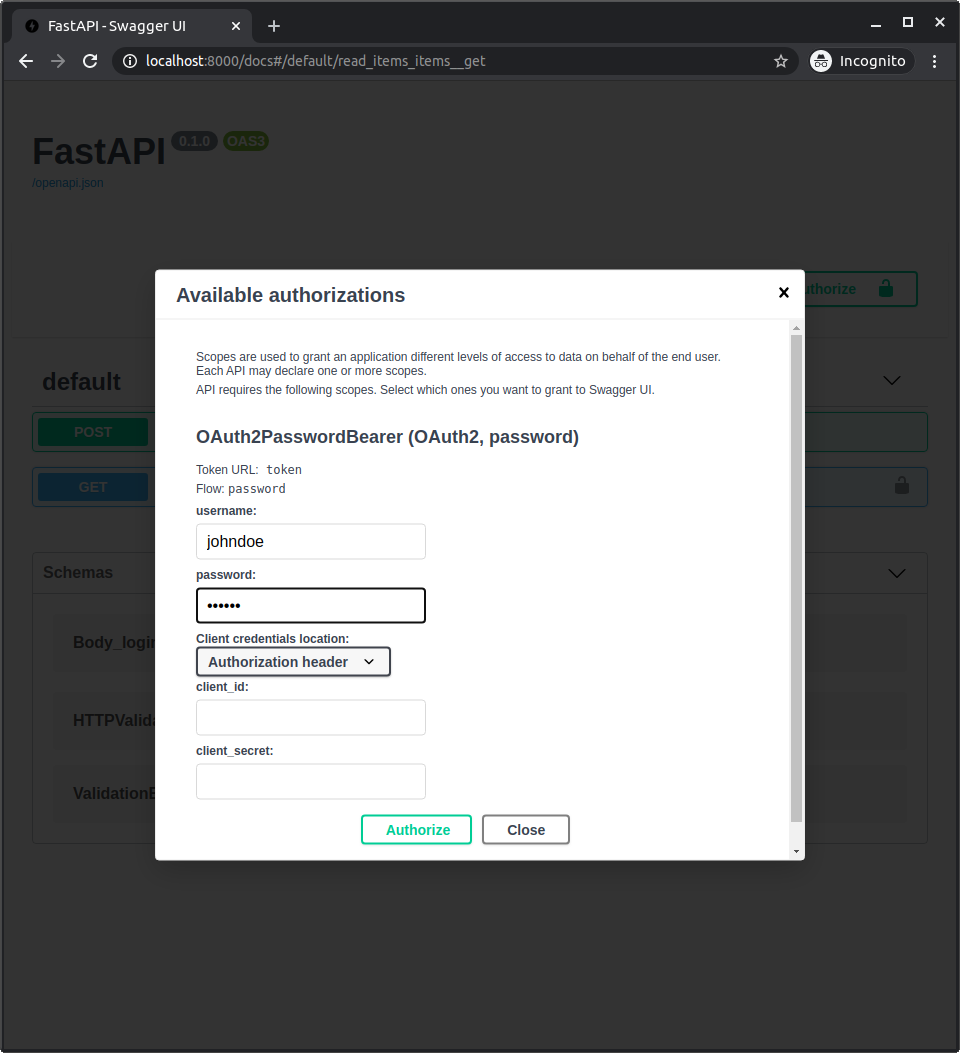
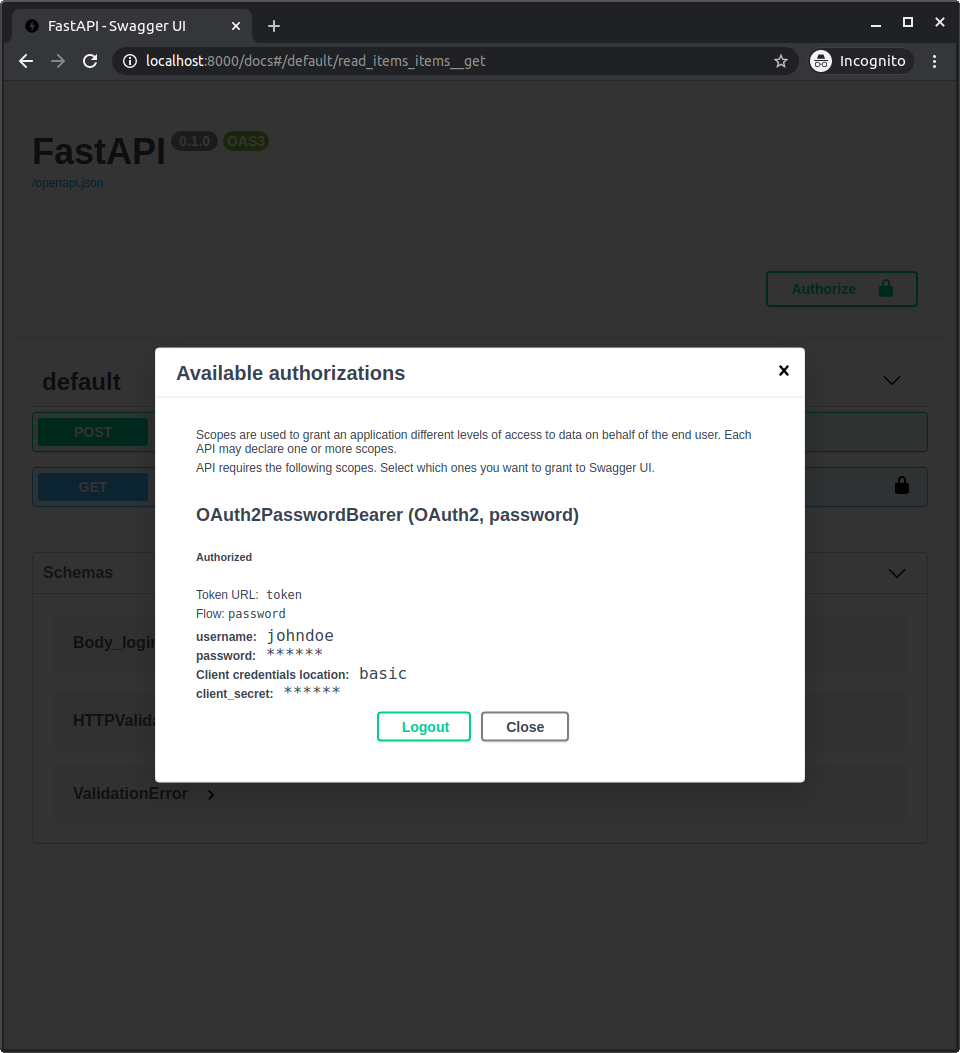
システムで認証されると、次のように表示されます:
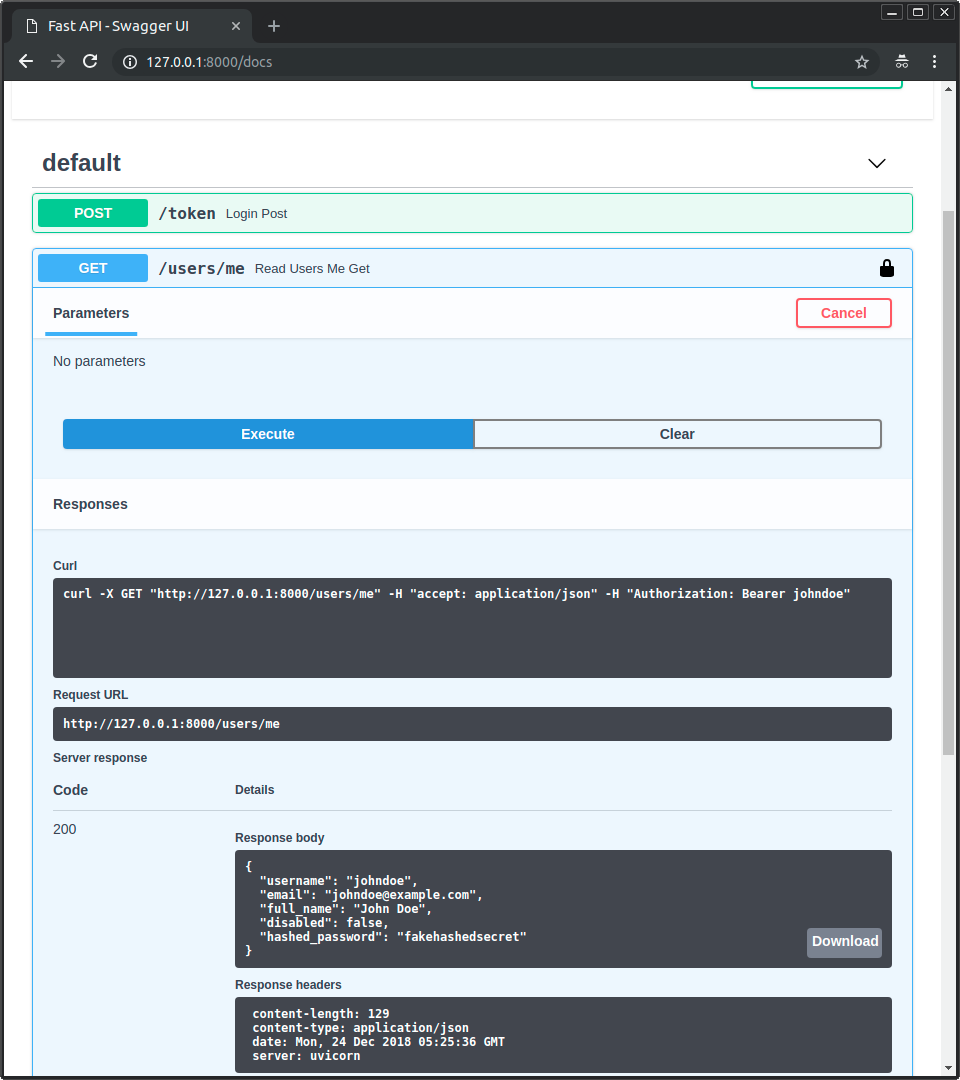
自分のユーザーデータを取得
GET の path /users/me を使います。
次のようなユーザーデータが取得できます:
{
  "username": "johndoe",
  "email": "johndoe@example.com",
  "full_name": "John Doe",
  "disabled": false,
  "hashed_password": "fakehashedsecret"
}
錠前アイコンをクリックしてログアウトし、同じ操作を再度試すと、次のような HTTP 401 エラーになります:
{
  "detail": "Not authenticated"
}
非アクティブユーザー
今度は非アクティブなユーザーで試してみます。次で認証してください:
User: alice
Password: secret2
そして GET の path /users/me を使います。
次のような「Inactive user」エラーになります:
{
  "detail": "Inactive user"
}
まとめ
これで、API のために username と password に基づく完全なセキュリティシステムを実装するための道具が揃いました。
これらの道具を使えば、任意のデータベース、任意のユーザー/データモデルと互換性のあるセキュリティシステムを構築できます。
ただし、実際にはまだ「安全」ではありません。
次の章では、安全なパスワードハッシュライブラリと JWT トークンの使い方を見ていきます。